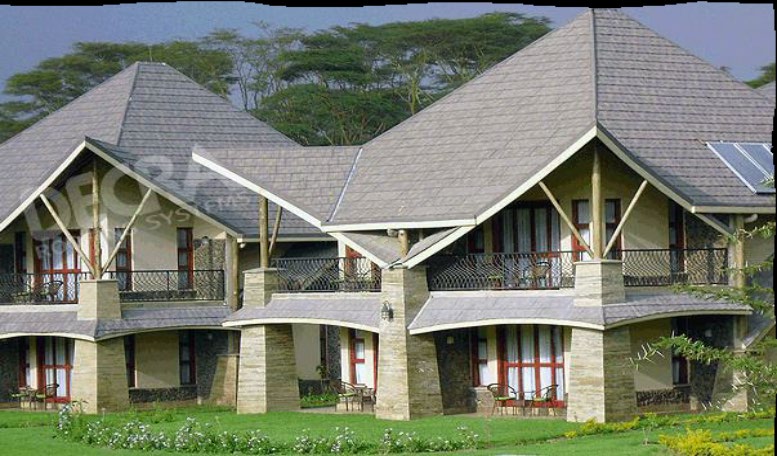
Kenya is not one climate, it is several. A roof that performs beautifully in Eldoret may corrode within a few years in Mombasa. Before comparing products, it helps to be honest about what your roof will actually face.
The three pressures that matter
Rainfall intensity. During the long rains, what matters is not the total volume but how fast it arrives. A roof pitched and guttered for gentle drizzle will overflow in a downpour, sending water behind fascia boards where you cannot see the damage until the ceiling stains.
Salt and humidity. Within roughly twenty kilometres of the coast, salt-laden air accelerates corrosion dramatically. Plain galvanised iron sheets that would last decades inland can begin to fail in a handful of years.
Ultraviolet exposure. At altitude, UV is far stronger than most people assume. It degrades coatings and fades colour, and it is the reason a roof can look tired long before it has structurally failed.
Matching the system to the site
For most inland residential work, stone-coated steel is the sensible default. It is light enough to reduce structural load, the stone chip layer takes the UV punishment instead of the substrate, and the profile range means you are not forced to choose between performance and appearance.
Near the coast, specify the corrosion protection explicitly rather than assuming it. Ask what the substrate is, what it is coated with, and what the warranty actually covers in a marine environment.
For large commercial spans, the calculation changes again — there, the weight saving of a lightweight system often pays for itself in reduced structural steel.
What to ask before you buy
- What is the warranty, and does it cover coastal installations?
- Is the product genuine, and can the supplier evidence it?
- What is the fixing specification, and who is accountable if it is installed wrongly?
That last question matters more than most people expect. A premium roof fitted badly will fail faster than a modest roof fitted well. Installation is not the place to economise.
If you are weighing options for a specific site, talk to us — the right answer genuinely does depend on where you are building.